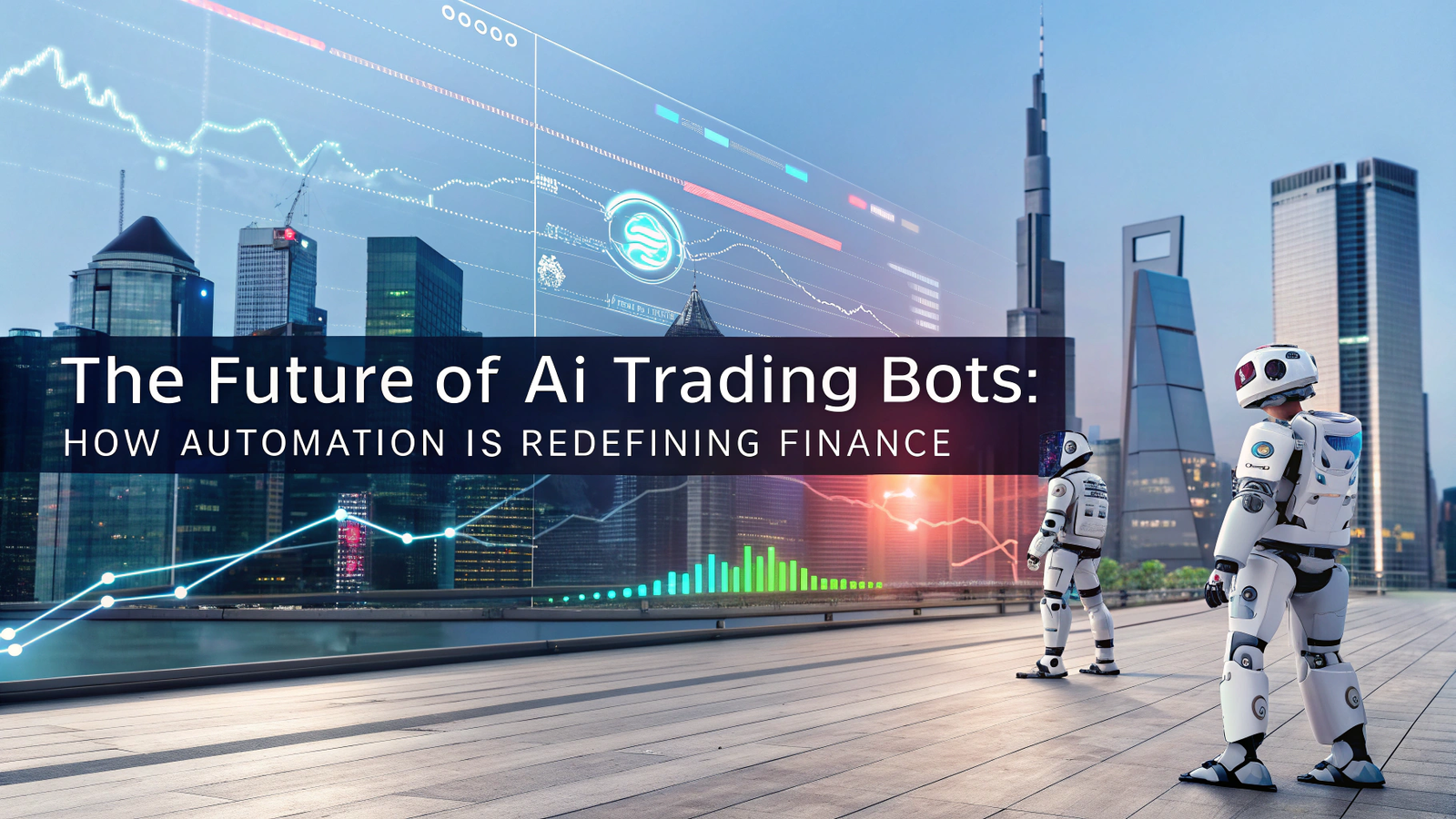
The financial world is changing rapidly. Technology that once belonged only to Wall Street firms now sits in the hands of everyday investors. AI trading bots and algorithmic systems are reshaping how people buy and sell assets, making decisions in milliseconds that would take humans hours to calculate. This shift is not just about speed. It represents a fundamental change in who can access sophisticated trading tools and how markets operate.
AI trading bots use machine learning and algorithms to analyze market data, identify patterns, and execute trades automatically without human emotion or delay. These systems operate continuously, processing thousands of data points to make split-second decisions that aim to capitalize on market opportunities while managing risk through predefined parameters.
How AI Trading Technology Actually Works
Understanding AI trading requires looking past the marketing hype. These systems combine several technologies to function. Machine learning algorithms study historical price movements, volume patterns, and market conditions. They learn to recognize situations that historically led to profitable trades. Natural language processing scans news feeds, social media, and economic reports to gauge market sentiment. Computer vision technology can even read charts and technical indicators.
The real power comes from speed and consistency. While a human trader might analyze a few currency pairs or stocks per hour, AI trading systems process thousands of assets simultaneously. They never get tired, emotional, or distracted. When preset conditions are met, trades execute in microseconds.
These systems operate on different timeframes. Some focus on high-frequency trading, making hundreds of trades per day to capture tiny price movements. Others take a longer view, holding positions for days or weeks based on broader trend analysis. The approach depends on the algorithm’s design and the user’s goals.
Risk management is built into the core programming. Stop-loss orders, position sizing rules, and exposure limits prevent any single trade from causing significant damage. The system follows these rules without exception, unlike human traders who might override their own guidelines during stressful moments.
The Disruption of Traditional Financial Services
Banks and investment firms once held a monopoly on sophisticated trading technology. Building these systems required millions in capital, teams of programmers, and expensive data feeds. Retail investors had to settle for delayed information and manual execution.
That barrier has crumbled. Fintech disruption has democratized access to tools that rival institutional capabilities. Cloud computing reduced infrastructure costs. Open-source libraries made machine learning accessible. Real-time data became affordable. Companies like Korvato now offer retail traders access to institutional-grade technology.
This shift threatens traditional business models. Robo advisors have already captured significant market share from human financial advisors by offering automated portfolio management at a fraction of the cost. AI-driven trading platforms are doing the same for active trading. The value proposition is compelling: lower fees, no emotional bias, and 24/7 market monitoring.
Traditional firms are responding by building their own AI capabilities or acquiring fintech startups. The competition benefits consumers through better technology, lower costs, and more choices. However, it also raises questions about market stability when algorithms dominate trading volume.
Current Applications Across Markets
AI trading is not limited to one asset class. In the forex market, algorithms capitalize on currency fluctuations across global time zones. The 24-hour nature of currency trading makes it particularly suited for automated systems that never sleep. Companies like Korvato have developed specialized engines for forex that analyze real-time data across multiple currency pairs simultaneously.
Stock markets see heavy algorithmic activity. Estimates suggest algorithms execute the majority of daily trading volume on major exchanges. These range from simple automated strategies to complex systems that adjust their behavior based on market conditions.
Cryptocurrency markets have become a testing ground for AI trading strategies. The extreme volatility and round-the-clock trading create opportunities for systems that can react faster than humans. The lack of traditional market structure also means fewer restrictions on automated trading.
Even options and futures markets now rely heavily on algorithmic trading. The mathematical complexity of derivatives pricing makes them natural candidates for AI analysis. Systems can calculate optimal entry and exit points across multiple strike prices and expiration dates simultaneously.
Real Benefits and Genuine Limitations
The advantages of algorithmic investing are measurable. Emotion removal ranks high on the list. Fear and greed drive poor trading decisions. AI systems follow their programming regardless of market panic or euphoria. They do not chase losses or become overconfident after wins.
Consistency in execution is another benefit. Every trade follows the same analysis process and risk parameters. There are no “gut feeling” trades that break the strategy. This consistency makes it easier to evaluate performance and refine the approach.
Time efficiency matters for traders with other responsibilities. An AI system monitors markets continuously while the user works, sleeps, or spends time with family. It can act on opportunities that appear at inconvenient hours.
However, limitations exist and deserve honest discussion. AI systems perform based on their programming and training data. They can fail when market conditions differ significantly from historical patterns. Black swan events or unprecedented situations may trigger unexpected behavior.
Technology dependence creates vulnerability. Internet outages, platform failures, or data feed problems can prevent trades from executing. Users need backup plans and cannot rely entirely on automation.
Market conditions change over time. A strategy that worked well in trending markets might fail in sideways or volatile conditions. Systems require ongoing monitoring and adjustment, not a “set and forget” approach.
| Advantages | Limitations |
|---|---|
| Eliminates emotional decision-making | Can fail during unprecedented market events |
| Operates 24/7 without fatigue | Requires stable technology infrastructure |
| Processes vast amounts of data quickly | May struggle when market patterns change |
| Executes trades with consistent discipline | Needs ongoing monitoring and adjustment |
| Manages multiple markets simultaneously | Past performance does not guarantee future results |
What Comes Next for Automated Trading
The technology continues to evolve rapidly. Current systems mostly react to market data. Future versions will likely incorporate predictive capabilities that anticipate market moves before they happen. Advances in deep learning and neural networks enable more sophisticated pattern recognition.
Natural language processing improvements will allow systems to better interpret news, social media sentiment, and even central bank communications. Understanding context and nuance remains a challenge for AI, but progress continues.
Integration across asset classes will increase. Rather than separate systems for stocks, forex, and crypto, unified platforms will manage diversified portfolios across all markets. This creates opportunities for cross-asset arbitrage and more sophisticated hedging strategies.
Personalization will improve as systems learn individual user preferences and risk tolerance. Rather than one-size-fits-all algorithms, AI will adapt to each trader’s goals, timeline, and comfort with volatility. The best AI trading bot solutions will offer customization while maintaining disciplined risk management.
Regulatory frameworks will mature as authorities develop guidelines specific to algorithmic trading. Expect more requirements around transparency, risk controls, and system testing. These regulations aim to protect both individual traders and market stability.
Access will continue to broaden. As costs decline and interfaces improve, more retail investors will adopt AI trading tools. This democratization represents a significant shift in financial market participation.
Responsible Use of Trading Automation
With powerful technology comes responsibility. Users must understand that all trading involves risk, regardless of automation level. No system guarantees profits. Markets can move against any position.
Starting with clear goals and realistic expectations is essential. AI trading bots are tools, not magic solutions. They work best when users understand the underlying strategy and monitor performance regularly.
Capital preservation should guide risk settings. Only trade with money you can afford to lose. Use appropriate position sizing and stop-loss levels. Avoid the temptation to increase risk parameters after losses.
Due diligence matters when choosing a platform. Research the company’s track record, technology infrastructure, and security measures. Read user reviews and understand the fee structure. Be skeptical of promises that sound too good to be true. Questions about whether something is a Korvato scam or legitimate service should be answered through research, verified user experiences, and transparent company information.
Continuous education helps users make informed decisions. Understanding basic market principles, technical analysis, and risk management improves outcomes even when using automated systems. The technology handles execution, but strategic decisions remain the user’s responsibility.
Moving Forward with Confidence
AI trading bots represent a genuine shift in financial markets. They provide retail investors with capabilities that were impossible to access a decade ago. The technology will continue improving, offering more sophisticated analysis and execution.
However, automation does not eliminate risk or guarantee success. These tools work best when users understand their capabilities and limitations. They complement human judgment rather than replace it entirely. The future of finance will likely involve collaboration between human insight and machine efficiency.
For investors curious about AI’s role in trading, the time to learn is now. Start with education, understand the technology, and approach automation with realistic expectations. The democratization of sophisticated trading tools creates opportunities, but success still requires discipline, patience, and responsible risk management.